Which one should you choose?
Choose on-grid if your power rarely goes and you want the lowest cost and the fastest payback. Choose hybrid if cuts are frequent or long, or if you work from home and cannot afford to lose power. The deciding question is not the technology, it is how many hours of backup you actually need.
Decision table: your situation and the better choice
| Your situation | Better choice | Why |
|---|---|---|
| Cuts are rare and short | On-grid | No battery to buy or replace, so the system costs less |
| Cuts are frequent, a few times a week | Hybrid | The battery keeps essential loads running |
| Work from home or run a home clinic | Hybrid | Wi-Fi, laptop and lights must not stop |
| Budget is the main limit | On-grid | Lowest upfront cost and 3 to 4 years payback |
| Lift, water pump or medical device at home | Hybrid | These loads need a supply during a cut |
| Your existing inverter already handles short cuts | On-grid | Your current backup can stay as it is |
| Not sure yet | On-grid, designed to add a battery | See the section on adding a battery later |
For a definition-level comparison that also covers off-grid, read our on-grid, off-grid and hybrid guide. This post only helps you decide between the two grid-connected options.
What happens in a power cut
An on-grid system shuts down when the grid fails. This is a safety rule: if the inverter kept pushing power into a dead line, it could injure a lineman repairing it. So on a sunny afternoon with a power cut, your panels are idle and your home gets nothing from them. The full workings are on our on-grid solar page.
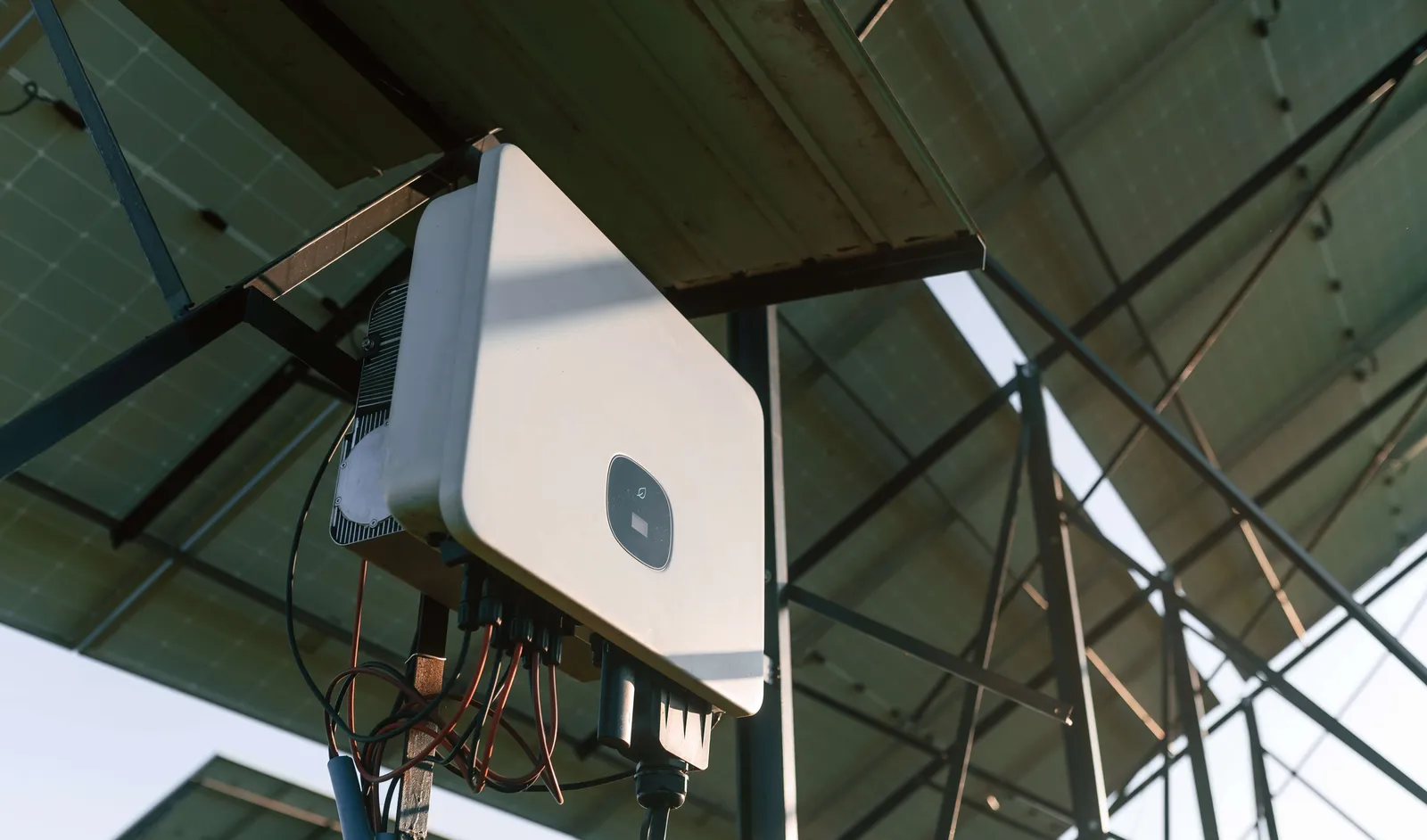
A hybrid system has a battery and a hybrid inverter. When the grid fails, the inverter moves your essential loads to solar and battery power in a fraction of a second. Lights, fans, Wi-Fi and a fridge keep running. When the grid returns, the loads shift back. Backup hours, battery sizes and package details are on our hybrid solar systems page.
The catch is the word essential. A hybrid system is wired so that only a chosen set of loads is backed up. Backing up a whole house with several ACs means a much bigger battery and a much bigger bill.
Cost: what on-grid and hybrid cost in Gurgaon
On-grid has a fixed rate card. Hybrid does not, because the price moves with the battery and the loads you want to back up.
| On-grid system | Price before subsidy | Price after subsidy |
|---|---|---|
| 3 kW | ₹1,80,000 | ₹1,02,000 |
| 5 kW | ₹2,80,000 | ₹2,02,000 |
| 10 kW | ₹5,20,000 | ₹4,42,000 |
The final on-grid price is confirmed after a site survey. For more price detail see the 5 kW solar system price in Haryana page.
For hybrid, the two parts you add are the inverter and the battery. The UTL HYB-3.6-GXLS2 3.6 kVA hybrid inverter starts from ₹85,020, and the UTL 12.8V 100Ah lithium battery starts from ₹24,990. These are starting prices for single parts, not a system price. The final price of a hybrid system depends on panel capacity, inverter size, battery size and phase, and is given after a site survey. Browse the hybrid solar inverters and lithium batteries we stock.
If you plan to finance the system, compare the rates in our solar loan interest rates guide before you settle on the battery size.
Payback and subsidy
On-grid payback is typically 3 to 4 years, depending on loan EMI, maintenance and panel cleaning. Hybrid with a battery is 4.2 to 4.8 years, because the battery adds cost without adding units of generation. That is roughly a year longer, and you pay it for backup rather than for savings.
On subsidy, PM Surya Ghar is meant for grid-connected rooftop homes with net metering, DCR panels and an MNRE-registered vendor. A hybrid system that is grid-connected and net-metered can qualify on the same terms, but eligibility depends on the design, so we confirm it at the site survey. The battery itself is not part of the subsidy calculation. The scheme period ends on 31 March 2027. Details are in our PM Surya Ghar guide.
How much battery do you need for essential loads
Do not size the battery for the whole house. Use this method:
- List the loads you want during a cut and write each one's wattage.
- Add the wattages to get your backup load in kW.
- Decide how many hours of backup you want.
- Multiply the load by the hours to get the energy in kWh.
- Divide by the usable depth of discharge, for example 0.8 for 80%, to get the battery size.
Example only: a 400 W load (a few fans, LED lights, a router and a laptop) for 5 hours needs 0.4 x 5 = 2 kWh. At 80% usable, the battery should be about 2.5 kWh. Your own numbers will be different, and we build this list with you at the survey.
An air conditioner or a water pump changes the result sharply, so decide early whether they are on the backup list. If you are unsure whether lithium or tubular suits your budget, read lithium vs tubular solar battery. For a lower-cost tubular option see the UTL UIT20036 175Ah tubular battery guide.
Can you start on-grid and add a battery later?
Often yes, but decide at the design stage. There are two routes. One is a hybrid-ready inverter, which accepts a battery later without changing the inverter. The other is adding equipment later, such as a battery inverter alongside the existing one. Which route works depends on your inverter model and your phase.
The risk of not planning is paying twice: a standard on-grid inverter may need to be replaced or supplemented if you add storage later. If outages are likely to get worse, ask us for both designs at the survey and compare the extra cost.
A real example: Maruti Kunj, Gurgaon
Maruti Kunj in Gurgaon has one 5 kW hybrid system and one 5 kW on-grid system on two separate meters, because of frequent power cuts. Subsidy was taken on both. The point is that the site did not have to pick one type: each supply was matched to the way it is used.
Next step
Tell us how often your power goes, which loads you cannot lose and your budget. We will give you the on-grid price, a hybrid starting price and the extra payback time side by side. Request a quote.