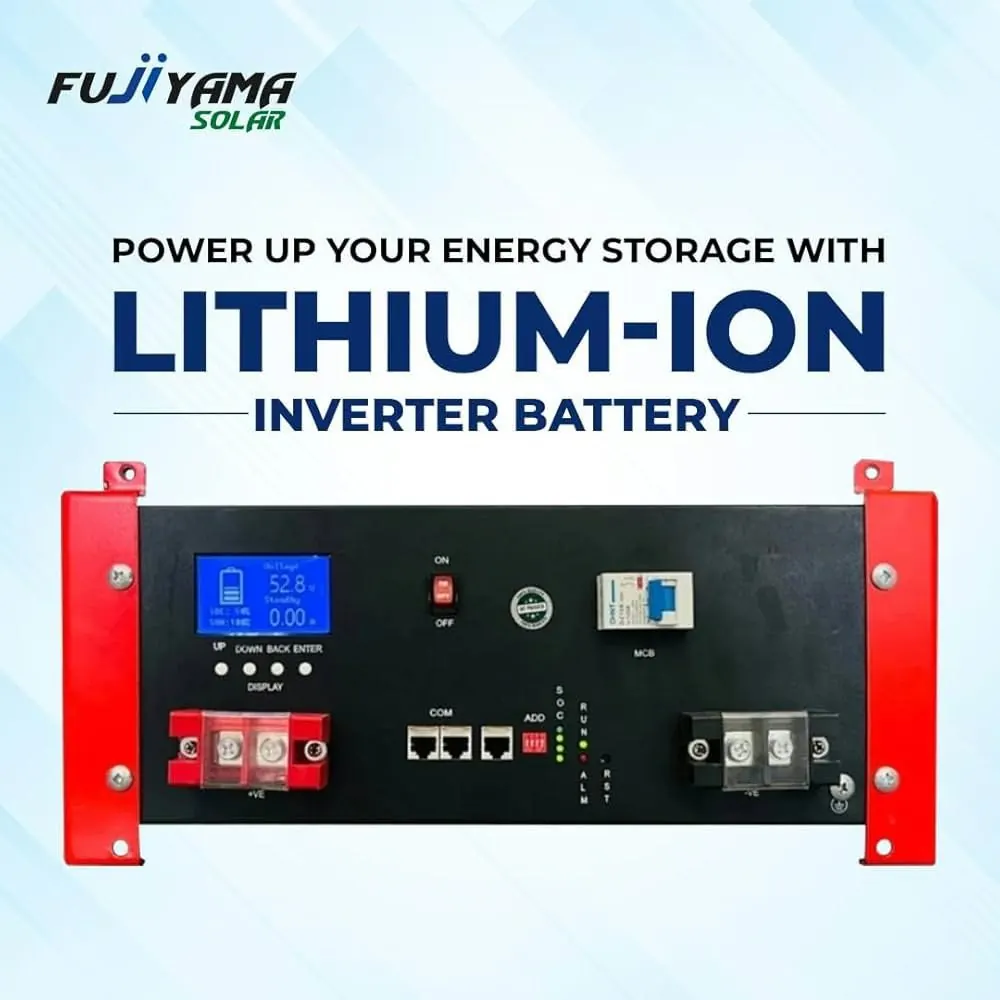
Lithium Battery for Solar in Gurgaon
Supply, sizing, installation and replacement of UTL LiFePO4 lithium batteries for home inverters, solar hybrid systems, shops and offices in Gurgaon.
Inquiry for Lithium Battery Solutions
Technical Specifications
- ChemistryLiFePO4 (Lithium Iron Phosphate)
- BrandUTL (Voltmen is a distributor)
- Low-Voltage Models12.8V, 25.6V, 48V and 51.2V, 100Ah
- Energy Range1.28 kWh to 5.12 kWh per pack
- High-Voltage Packs96V, 120V and 240V, on order
- Price Starts From₹24,990 (UTL 12.8V 100Ah)
- Battery Warranty5 to 10 years, as per brand
- InstallationIn-house engineers, no sub-contracting
Why Choose Our Lithium Battery Solutions?
Supply, sizing, installation and replacement of UTL LiFePO4 lithium batteries for home inverters, solar hybrid systems, shops and offices in Gurgaon.
UTL LiFePO4 Range
Voltmen is a UTL distributor and supplies 12.8V, 25.6V, 48V and 51.2V LiFePO4 batteries, with high-voltage packs on order.
Tubular-to-Lithium Replacement
We remove your old tubular bank and fit a lithium pack of the matching system voltage, so you do not carry stands, trolleys or water top-ups.
Sizing From Your Load
We size the battery from your appliance list and the backup hours you want, not from a catalogue guess.
Inverter Compatibility Check
Before you buy, we check the inverter voltage, the lithium charging profile and whether it can talk to the battery BMS.
5 to 10 Year Warranty
Batteries carry a 5 to 10 year warranty, as per brand; each UTL model lists its own warranty on the product page.
In-House Installation
Our own engineers mount, wire, protect and commission the battery. We do not sub-contract the work.
Get a Detailed Engineering Audit
Our engineers will visit your site, check shadows, roof or structure and load, and give you a written quote. The survey is free and carries no obligation.
Book My Free AuditLithium battery for solar in Gurgaon: what it is and who needs it
A lithium battery for solar in Gurgaon is, in almost every case, a LiFePO4 battery. The name stands for lithium iron phosphate, a cell chemistry that is stable, sealed and built for daily charging and discharging. It stores the power your panels make, or the power from the grid, and gives it back to your inverter when you need it.
People usually come to us for one of three reasons. Their tubular battery is dying and they want a replacement that lasts longer. They are adding a hybrid inverter to a solar system and want a battery that suits daily cycling. Or they run a shop, clinic or office and want backup without a stand full of heavy batteries and a water-topping routine.
Voltmen Solar is a UTL distributor in Sector 17, Gurugram. We supply the batteries, help you choose the size, check your inverter, and fit the battery with our own engineers. This page covers how to choose and what to check. For the wider picture of backup, read our battery storage service.
Want the bigger picture of backup and ESS? See solar battery storage for homes and industry.
Why people switch from tubular to a lithium inverter battery
A tubular lead-acid battery is cheap to buy and well understood. Its weak points show up over the years: it should only be used to about half its rated capacity, it needs distilled water, it is heavy, and it slowly loses capacity. A LiFePO4 battery lets you use much more of what you paid for, needs no water and can be fitted on a wall.
The table compares the two in general terms. Numbers are given only where they appear in our UTL product data. For a longer cost and life comparison, read our lithium versus tubular blog post.
| Point | Lithium (LiFePO4) | Tubular lead-acid |
|---|---|---|
| Upfront cost | Higher | Lower |
| Usable depth of discharge | 80% is the figure on UTL datasheets; 80 to 90% is usual | About 50% for daily use |
| Cycle life | UTL models list 3,500 to 4,000+ cycles | Fewer cycles, shorter life |
| Water top-up | None, sealed unit | Periodic distilled water |
| Charging time | Faster | Slower |
| Weight and space | Compact, wall or rack mounting | Heavy, needs a stand or trolley and ventilation |
A BMS (battery management system) inside a lithium pack protects the cells from overcharge, deep discharge, short circuit and heat.
UTL lithium battery range we supply in Gurgaon
These are the low-voltage UTL packs for homes, shops and small offices, taken from our product data. Each one stores 1.28 kWh to 5.12 kWh. Most are held in stock at our Sector 17 warehouse, but confirm availability when you ask.
| Model | Voltage | Capacity | Energy | Typical use | Warranty |
|---|---|---|---|---|---|
| UTL 12.8V 100Ah wall mount | 12.8V | 100Ah | 1.28 kWh | 12V home inverters, small shops and clinics, apartment backup | 5 years manufacturer + 5 years extended support |
| UTL 25.6V 100Ah | 25.6V | 100Ah | 2.56 kWh | 24V inverters and PCUs, independent floors, clinics and retail stores | 5 years manufacturer + 5 years extended support |
| UTL 48V 100Ah (SM) | 48V | 100Ah | 4.8 kWh | 48V hybrid systems, villas and builder floors, server rooms | 5 years replacement warranty |
| UTL LiFePO4 48V 100Ah (PM) | 48V | 100Ah | 4.8 kWh | Scalable microgrids and offices; up to 8 modules in parallel | 5 years manufacturer warranty |
| UTL 51.2V 100Ah (LP100-PM) | 51.2V | 100Ah | 5.12 kWh | 5 kW and 6 kW hybrid inverters, luxury builder floors | 5 years manufacturer + 5 years extended service |
UTL 12.8V 100Ah is the lowest-priced model: price starts from ₹24,990 for the UTL 12.8V 100Ah wall-mount battery. Prices for the other models are on the product pages.
For factories, hospitals and large villas, UTL also makes high-voltage 96V, 120V and 240V packs of 9.6 kWh to 24 kWh. These are supplied on order and sized from a load study, so they are covered on our energy storage system page.
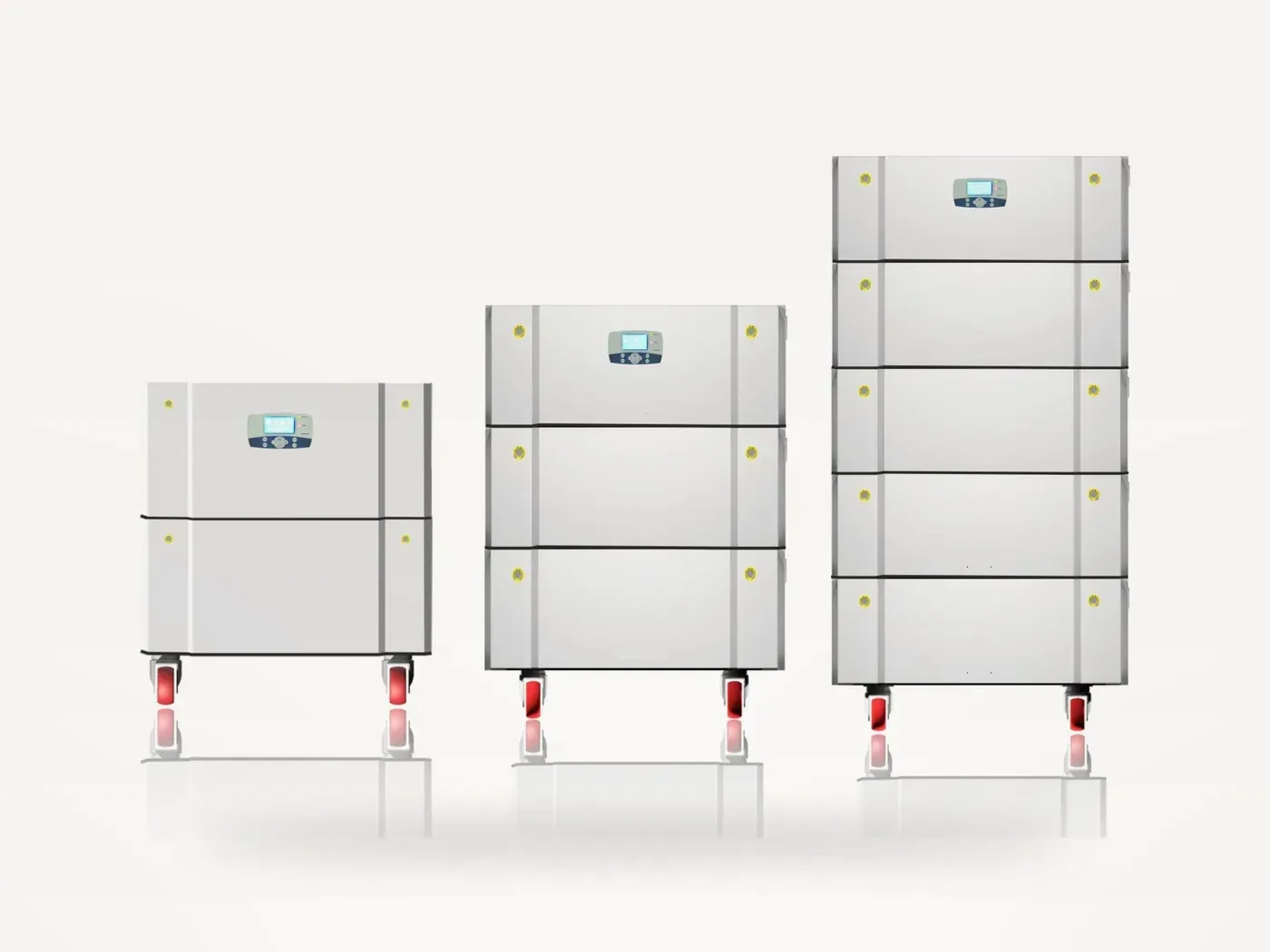
How to choose lithium battery capacity from your load
Capacity is a simple sum. You list what must run, work out the power it draws, decide how many hours you want, and then pick a battery that stores that much usable energy. These are the steps.
Worked example, for illustration only. Say your essential load is 400 W: three fans, six LED lights, a router and a TV. You want about 4 hours. You need 0.4 kW times 4 hours, which is 1.6 kWh. A 25.6V 100Ah battery stores 2.56 kWh. At 80% usable that is about 2.05 kWh, so it covers the job with margin. In practice, inverter losses trim the runtime a little, so we keep a buffer.
If you plan to add solar later, tell us now. The battery should suit the hybrid inverter you will buy, not only the inverter you have today.
- List the appliances you must run in a power cut: fans, lights, router, TV, fridge, computers. Leave heavy loads like geysers and air conditioners off the list unless you size for them.
- Add up their watts to get the load in kW. Use the label or the manual; an LED light is a few watts, a ceiling fan a few tens of watts.
- Choose your backup hours. Four hours covers most city power cuts; overnight needs more.
- Energy needed in kWh is the load in kW multiplied by the hours.
- Usable energy of a battery is voltage times Ah divided by 1,000, then multiplied by the usable depth of discharge. Pick a battery whose usable energy is at least what you need, with some margin.
Will a lithium battery work with your existing inverter?
Not always, and this is the check that saves most problems. We confirm these points before you pay, and you should ask any seller the same.
If your inverter cannot support lithium, the fix is usually a compatible inverter, not a workaround. We tell you that plainly at the check.
- Voltage match: the battery system voltage must match what the inverter is built for, such as 12V, 24V or 48V.
- Charging profile: many older inverters charge with a lead-acid profile. A lithium pack needs a lithium setting or a charger designed for it, and the wrong profile can shorten battery life.
- BMS communication: hybrid inverters often talk to the battery over CAN or RS485 so the inverter knows its state of charge and limits. UTL lists RS485 and CAN on several of its packs, and the inverter must support the same protocol.
- Current limits: check the maximum charge and discharge current of the pack against what the inverter will draw.
- Compatibility list: the product pages name the UTL inverters each battery is listed for. If your inverter is not on it, we check it with you before ordering.
Replacing a tubular battery bank with lithium
Replacement is the most common job we do. Here is what changes when the old bank goes out.
| Item | Tubular setup | Lithium setup |
|---|---|---|
| Number of batteries | Two to four batteries in series, matching the inverter voltage | One pack of the matching voltage, for example 12.8V, 25.6V or 51.2V |
| Placement | Stand or trolley on the floor, with air around it | Wall mount or floor mount, as per the model |
| Care | Water checks and terminal cleaning | Visual check and a clean, dry spot |
| Inverter setting | Lead-acid charging profile | Lithium profile set at installation |
| Cabling and protection | Existing links between batteries | New cable of correct size, breaker or fuse and earthing |
Do not mix old tubular batteries with a lithium pack on the same inverter. They need different charging, and mixing them stresses both. We remove the old bank and take the cables out cleanly.
Lithium battery installation and safety in Gurgaon homes and shops
A good battery can still fail if it is fitted badly. This is what we look at on every job, described in general terms.
- Mounting: a wall-mount pack needs a solid wall and the correct brackets; a floor pack needs a level, dry base.
- Location: indoors, away from direct sun, water and heat sources, with air around the case. Check the operating temperature range on the datasheet.
- Ventilation: lithium packs do not release acid fumes like lead-acid, but they still need clearance so that heat can leave the case.
- Protection devices: a correctly rated DC breaker or fuse between battery and inverter, short and well-sized cables, tight terminals and proper earthing.
- Settings: lithium charging profile and voltage limits set on the inverter and checked with a test charge and discharge.
- Do not stack other items on the battery, and do not open the case. Any internal work is for the manufacturer.
Warranty on a UTL lithium battery and what to keep for a claim
Battery warranty is 5 to 10 years, as per brand. For the UTL models above, the datasheet lists 5 years, and the 12.8V, 25.6V and 51.2V models add 5 years of extended support or service. The 48V models list 5 years. Warranty covers manufacturing faults, not damage from wrong wiring, water, impact or use outside the rated limits.
Keep these together in one folder, paper or phone, from the day of installation.
- The GST invoice showing model and serial number
- The warranty terms printed on the datasheet or card
- The installation date and the name of the installer
- A photo of the battery label and the inverter settings page
- Any service reports and calls you raise, with dates
Care, battery life and where to buy from a UTL dealer in Gurgaon
Lithium care is light but not zero. Keep the battery clean and dry, avoid heat, look at the terminals now and then, and do not leave it fully discharged for weeks. If the inverter shows a fault or the battery shows an alarm, switch off safely and call us rather than resetting repeatedly. Life depends on how deeply and how often you cycle it, the temperature it works in and the inverter settings. We do not promise a number of years, but the datasheet cycle figures above give you the design basis.
You can see the full UTL range, specifications and prices on our lithium battery category page, or visit us at Sukhrali, Sector 17, Gurugram, Monday to Saturday, 9 AM to 8 PM. Call +91 9540003075, or send your load list and inverter photo with the quote form.
Our Process
How It Works
From your first call to a fully commissioned system — here is exactly what to expect.
Load list and inverter check
You share your appliance list and a photo of the inverter label. We note the system voltage, the inverter model and the backup hours you want.
Capacity and model selection
We convert your load into kWh, allow for usable depth of discharge and pick the UTL model and number of packs that fit.
Compatibility confirmation
We confirm voltage match, the lithium charging setting and, for hybrid inverters, the BMS communication link, before any order is placed.
Old bank removal
If you are replacing tubular batteries, our team disconnects and removes the old bank and cables safely.
Mounting, wiring and protection
We fix the battery on the wall or floor, fit the correct cable size, breaker or fuse and earthing, and check ventilation.
Test and handover
We charge, discharge and test under load, set the inverter profile, and give you the invoice, serial number and warranty details.
Questions Answered
Lithium Battery for Solar in Gurgaon: FAQs
What is the price of a lithium battery for solar in Gurgaon?
UTL lithium battery price starts from ₹24,990 for the UTL 12.8V 100Ah wall-mount battery. Larger packs such as 25.6V, 48V and 51.2V cost more, and their prices are on the product pages. A full hybrid system with solar is priced after a site survey.
Is a lithium inverter battery worth it over a tubular battery?
It costs more upfront, but you can use more of its capacity, it needs no water top-up, it charges faster and UTL lists 3,500 to 4,000+ cycles. If you have daily power cuts or run solar with a hybrid inverter, it usually suits better. For rare, short cuts, tubular can be enough.
Can I use a lithium battery with my existing inverter?
Sometimes. The battery voltage must match the inverter, and the inverter needs a lithium charging profile. Hybrid inverters may also need to talk to the battery BMS over CAN or RS485. Send us the inverter model and we will confirm before you order.
How many hours of backup will a lithium battery give?
Backup hours are roughly usable kWh divided by your load in kW, a little less after inverter losses. A 2.56 kWh battery at 80% usable gives about 2.05 kWh, so a 400 W load runs for about 5 hours before losses. We size it from your actual appliance list.
Which UTL lithium battery suits a 12V, 24V or 48V inverter?
Match the battery to your inverter voltage. The UTL 12.8V 100Ah suits 12V inverters, the 25.6V 100Ah suits 24V inverters and PCUs, and the 48V and 51.2V models suit 48V hybrid systems. Check the inverter label first, or send us a photo.
Can I mix lithium and old tubular batteries?
No. The two chemistries need different charging and behave differently under load, so mixing stresses both and can shorten life. When you move to lithium, the old bank is removed and the inverter is set to a lithium profile.
What is the warranty on UTL lithium batteries?
Battery warranty is 5 to 10 years, as per brand. The UTL 12.8V, 25.6V and 51.2V models list 5 years plus 5 years of extended support or service, and the 48V models list 5 years. Keep your invoice and serial number for any claim.
Do you install the lithium battery or only sell it?
We do both. Voltmen engineers mount the battery, fit cables, breaker and earthing, set the inverter profile and test the system. We do not sub-contract installation, so one team handles supply and fitting.
Is a lithium battery safe to keep at home?
LiFePO4 is a stable lithium chemistry, and the pack has a BMS that guards against overcharge, deep discharge, short circuit and heat. It still needs correct cables, a breaker or fuse, earthing, a dry indoor spot and air around the case.
Can I add a lithium battery to my on-grid solar system?
A plain on-grid inverter has no battery port and shuts down in a grid outage. To add a battery you usually need a hybrid inverter. We check your system at survey and tell you what is needed.
Related Pages
- UTL lithium batteriesFull range, specs and prices
- Solar battery storageBackup for homes and industry
- Energy storage systemHigh-voltage packs and ESS for sites
- Lithium vs tubularA plain comparison for Gurgaon buyers
- Hybrid invertersInverters that manage solar, battery and grid
- Get a quoteSend your load list and inverter photo