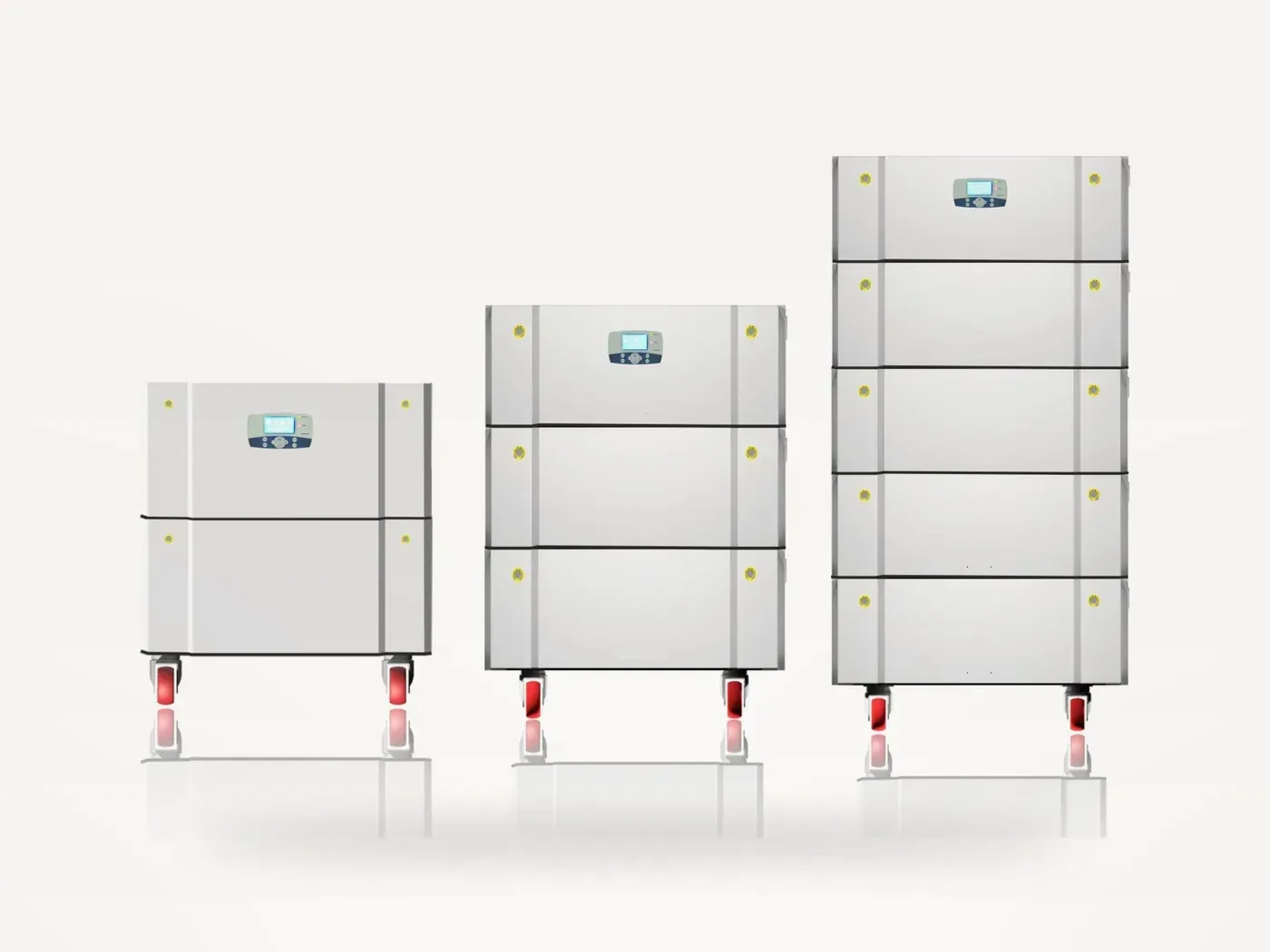
Off-Grid Solar System in Gurgaon
Off-grid solar system in Gurgaon with MPPT inverter and lithium or tubular battery, for farmhouses, sheds, tube wells and sites with weak DHBVN supply.
Inquiry for Off-Grid Solar
Technical Specifications
- System TypeStand-alone, no grid export
- InverterUTL Gamma+ and Heliac MPPT solar PCUs
- Battery OptionsLiFePO4 lithium or tall tubular lead-acid
- Net MeteringNot applicable
- PM Surya Ghar SubsidyNot available for pure off-grid
- Panel Warranty12-year product + 25 to 30-year power (as per brand)
- Battery WarrantyUTL lithium 5 years; tubular 36 to 60 months, per model
- PricingAfter load study and site survey
Why Choose Our Off-Grid Solar?
Off-grid solar system in Gurgaon with MPPT inverter and lithium or tubular battery, for farmhouses, sheds, tube wells and sites with weak DHBVN supply.
No Grid Needed
The system makes, stores and uses its own power, so it works where there is no DHBVN connection or where the supply is very unreliable.
Load-Based Sizing
We list your appliances and the hours you need backup, then size the panels, inverter and battery from that load study.
MPPT Solar Inverter
An off-grid MPPT inverter or PCU charges the battery from the panels and runs your loads, with UTL Gamma+ and Heliac models in stock.
Lithium or Tubular Bank
You choose between a LiFePO4 lithium bank and a lower-cost tubular lead-acid bank, and we set the charging profile to match.
Farmhouse and Pump Sites
Farmhouses, tube-well sheds, remote shops and sites under construction are the usual places where a stand-alone system makes sense.
Honest Fit Check
If you have a stable grid, we will tell you that on-grid or hybrid is cheaper, because off-grid does not get net metering or the PM Surya Ghar subsidy.
Get a Detailed Engineering Audit
Our engineers will visit your site, check shadows, roof or structure and load, and give you a written quote. The survey is free and carries no obligation.
Book My Free AuditOff-grid solar system in Gurgaon: what it is and who needs it
An off-grid solar system in Gurgaon is a stand-alone power plant. Panels make electricity in the day, a battery stores it, and an off-grid inverter runs your loads day and night without any grid connection. There is no net meter and nothing is exported to DHBVN.
Think of it as your own small power station. You pay once for the equipment and then there is no electricity bill for the power it makes. The trade-off is that you carry the battery cost, and the system can only give what the panels and battery were sized for. That is why a proper load study comes first.
It is built for places where the grid is missing or cannot be trusted: farmhouses, tube-well and pump sheds, remote shops, farm offices, small workshops and sites under construction. It also suits people who want backup but do not want a grid export agreement.
Voltmen Solar designs, supplies and installs these systems with our own engineers. We are an authorised distributor of UTL and Fujiyama products, so the inverter and battery come from the same team that installs them.
Off-grid, on-grid and hybrid: the real differences
Most buyers compare three types. The table shows what changes between them. Off-grid is the only one that works with no grid at all, and it is also the only one that cannot earn a subsidy.
| Point | Off-grid | On-grid | Hybrid |
|---|---|---|---|
| Grid connection needed | No | Yes | Yes |
| Battery | Always, and it is the biggest cost | None | Yes, usually lithium |
| Works in a power cut | Yes, from battery and solar | No, it stops | Yes, for essential loads |
| Net meter and export | Not applicable | Yes, with DHBVN | Yes, where net metering applies |
| PM Surya Ghar subsidy | No | Yes, for eligible homes | Yes, for eligible homes |
| Cost per unit saved | Highest | Lowest | In between |
Subsidy needs a commissioned net meter, DCR modules and an MNRE-registered vendor, and it is never guaranteed.
Who should buy off-grid solar, and who should not
Off-grid is the right answer only when you really need to run without the grid. We would rather tell you that at the survey than sell you a bigger battery than you need.
- Buy it for a farmhouse, pump shed or remote shop with no DHBVN connection or a connection that fails for long stretches.
- Buy it for a site under construction or a cabin where bringing a grid line is slow or costly.
- Do not buy it if you have a reliable grid and want lower bills. On-grid is cheaper per unit and gets the subsidy.
- Do not buy it for a home if you want the PM Surya Ghar subsidy. The subsidy needs a net-metered grid-connected system, so a pure off-grid system does not get it.
- If you have a grid but want backup in cuts, a hybrid system is usually the better fit than off-grid.
Parts of an off-grid solar inverter system
Every off-grid system has the same five blocks. The way they are sized and matched is what decides whether it runs well for years.
For inverter models see our off-grid MPPT solar inverters. Price starts from ₹14,500 (MRP, incl. GST) for the UTL Heliac series, a range of 1,050 VA to 2,550 VA. The UTL Gamma+ 2000 24V is a 2 kVA model that accepts up to 2,000 W of panels.
- Solar panels: they make DC power. A kW of panels gives about 120 to 180 units a month.
- Off-grid MPPT inverter or PCU: it converts DC to AC, tracks the best panel voltage and charges the battery.
- Battery bank: lithium or tubular lead-acid. It holds the energy for evening, night and cloudy spells.
- Structure: galvanised mounting on a roof or on the ground, built for your wind load.
- Protection: DC fuses or breakers, surge protection, earthing and correctly sized cable.
How off-grid solar sizing works from your load
Sizing starts from three numbers: the energy you use in a day in kWh, the part of it used after sunset, and the highest load that may run at one time in kW. Panels follow the daily energy. The battery follows the night energy. The inverter follows the peak load, including the starting surge of any motor.
Worked example, not a Voltmen quote or price. Say a farmhouse uses 8 kWh a day, of which 5 kWh is after sunset, with a peak of about 2.5 kW. At the cautious figure of about 4 units per kW per day, 8 divided by 4 gives 2 kW of panels. Allowing for battery and inverter losses, you would plan for about 2.5 kW.
For the battery, divide the night energy by the usable depth of discharge. Lithium at 80% usable needs 5 divided by 0.8, about 6.25 kWh. Tubular at 50% usable needs 5 divided by 0.5, about 10 kWh. The inverter must carry the 2.5 kW peak with margin, and its battery voltage must match the bank.
These numbers show the method only. Your own load list, hours and motor types change the answer, so the final design comes after a survey.
Three habits keep the design honest. First, list only the loads you truly need on battery, and move heavy daytime work such as a pump to the sunny hours so it runs straight from the panels. Second, keep a margin for cloudy days, because a battery sized with no spare will be empty after one dull afternoon. Third, match the battery voltage to the inverter, for example a 24 V bank for a 24 V PCU, since the wrong voltage cannot be fixed by wiring.
Lithium or tubular battery for an off-grid solar system
The battery is the largest cost and the part most likely to need replacement. Choose by how often you cycle it and how much you can spend now.
| Point | Lithium (LiFePO4) | Tubular lead-acid |
|---|---|---|
| Upfront cost | Higher | Lower |
| Usable depth of discharge | About 80 to 90% | About 50% |
| Cycle life | UTL 12.8V 100Ah is rated 3,500+ cycles at 80% DoD | Fewer cycles; typically 4 to 6 years with care |
| Maintenance | No water top-up | Distilled-water top-up and a ventilated spot |
| Space | Compact, wall or rack mount | Bulky, needs a stand |
| Warranty (UTL) | 5 years on the models listed | 36 to 60 months, per model |
A simple rule helps. If the system will cycle the battery every day, as most off-grid homes and farmhouses do, lithium usually costs less over its life, because you use more of each kWh and replace it later. If the system is for occasional use or the budget is tight, tubular is a fair starting point, and many UTL off-grid inverters accept both. Tell us which you prefer and we set the charging profile to match, since a tubular bank and a lithium pack need different charge voltages.
UTL lithium battery price starts from ₹24,990 for the 12.8V 100Ah wall-mount model. UTL tubular battery price starts from ₹18,500 for the UIT16036 150Ah. Larger banks are priced after a load study.
Off-grid solar installation steps and time in Gurugram
There is no net-metering file for an off-grid system, so there is no DHBVN wait. The time depends on the site, the structure and the equipment available.
We confirm the installation schedule after the site survey.
Because there is no grid link, you can switch the system on as soon as testing is done. Our in-house engineers do the work and we never sub-contract it, so the same team that designed the system also commissions it and explains it to you. Panels carry a 12-year product warranty and a 25 to 30-year linear power warranty, as per brand, and workmanship has a 2-year warranty.
- Load list and survey, then a written quote with the parts list.
- Structure and panel mounting, with DC cabling and protection.
- Inverter and battery mounting in a dry, ventilated space.
- Charging profile set for your battery type, then a test under real load.
- Handover with a walkthrough of the display, modes and alarms.
Maintenance and battery life
Off-grid systems have no grid to fall back on, so upkeep matters more. Clean the panels regularly, because dust can cut output noticeably in Gurgaon. Check battery terminals, keep the inverter free of dust and insects, and keep the bank in a cool, ventilated place.
For tubular batteries, top up distilled water as advised. Avoid running any battery flat every night; a slightly larger bank lasts longer than a small one worked hard. Our maintenance and cleaning service offers waterless robotic panel cleaning, and AMC starts from ₹1,000 per month, priced after survey.
Pricing and how to start
We do not publish a fixed off-grid system price, because it changes with the battery bank, panel kW and structure. Part prices start from ₹14,500 for a UTL Heliac inverter, ₹18,500 for a UTL tubular battery and ₹24,990 for a UTL lithium battery. Full system price is given after a load study and survey.
Call +91 9540003075 (Mon to Sat, 9 AM to 8 PM) or ask for a quote. Our office is at Sukhrali, Sector 17, Gurugram. For batteries on a grid-connected home, see our battery storage page.
Our Process
How It Works
From your first call to a fully commissioned system — here is exactly what to expect.
Load list and site visit
We note every appliance you want to run, its wattage, the hours of use and any motor or pump that needs a high starting current. We also check roof or ground space and shade.
System sizing
Panel kW, inverter size, battery voltage and battery kWh are worked out from your daily energy, your night energy and your peak load. You get a written quote with a clear parts list.
Structure and panels
Galvanised structure is fixed on the roof or ground and the panels are mounted and wired into strings with DC cable, fuses and surge protection.
Inverter and battery bank
The off-grid inverter and battery bank are mounted in a ventilated, dry space, connected with correctly sized cables and set to the right charging profile for lithium or tubular.
Testing under load
We run your real loads, check charging from solar, confirm battery voltage behaviour and test the alarms before handover.
Handover and upkeep plan
You get a walkthrough of the display, operating modes and cleaning routine, and an AMC option can be added, priced after survey.
Questions Answered
Off-Grid Solar System in Gurgaon: FAQs
What is an off-grid solar system?
It is a stand-alone solar system with panels, an off-grid inverter and a battery bank, and no connection to the grid. It makes, stores and uses its own power, so there is no net meter and no export. It suits farmhouses, sheds and sites where the supply is missing or unreliable.
Does an off-grid solar system get the PM Surya Ghar subsidy?
No. The subsidy needs a grid-connected system with a commissioned net meter, DCR modules and an MNRE-registered vendor. A pure off-grid system has none of these, so it does not qualify. If you want a subsidy for your home, on-grid or hybrid is the route.
Is off-grid or hybrid better for a home in Gurgaon?
For most homes with a DHBVN connection, on-grid or hybrid is better. They cost less per unit saved and can earn the subsidy. Off-grid makes sense only when there is no grid, or the grid fails so often that you must run independently.
How do you size an off-grid solar system?
We list your appliances, daily kWh, night kWh and peak load. Panels follow daily energy, the battery follows night energy divided by usable depth of discharge, and the inverter follows peak load including motor start surge. The final design comes after a survey.
Should I choose a lithium or a tubular battery?
Lithium costs more upfront but gives 80 to 90% usable capacity, no water top-up and compact mounting. Tubular costs less and suits tight budgets, but you use about 50% of it and need to top up water. Daily cycling favours lithium.
Can an off-grid solar system run a tube well or motor?
It can, if the inverter is sized for the motor starting surge and not just the running load. Tell us the motor rating and type at the survey. Large or heavy-duty pumps may need a different design, so we check this before quoting.
What is the starting price of an off-grid solar inverter?
Price starts from ₹14,500 (MRP, incl. GST) for the UTL Heliac series. The Gamma+ 2000 24V has a higher listed MRP. The inverter is only a part of the cost, so full system price is given after a load study and survey.
How long does off-grid solar installation take?
There is no net-metering step, so the time depends on the structure, the site and the equipment. We confirm the schedule after the site survey.
What maintenance does an off-grid system need?
Clean the panels regularly, check battery terminals, keep the inverter dust-free and the bank ventilated. Tubular batteries need distilled-water top-ups. Waterless robotic cleaning is offered, and AMC starts from ₹1,000 per month, priced after survey.
Can I add solar panels to a UTL Gamma+ later?
Yes. UTL Gamma+ works as a pure sine wave home inverter even before panels are connected. You can add panels later within the unit limit, for example up to 2,000 W on the Gamma+ 2000, which turns it into a solar PCU.
Related Pages
- Off-grid MPPT solar invertersUTL Gamma+ and Heliac solar PCUs
- Lithium batteriesUTL LiFePO4 range with specs
- Tubular batteriesLower-cost solar lead-acid option
- Solar battery storageBackup for grid-connected homes and industry
- Hybrid solar systemsBackup with grid and subsidy support
- Request a quoteLoad study and written proposal