Quick Answer
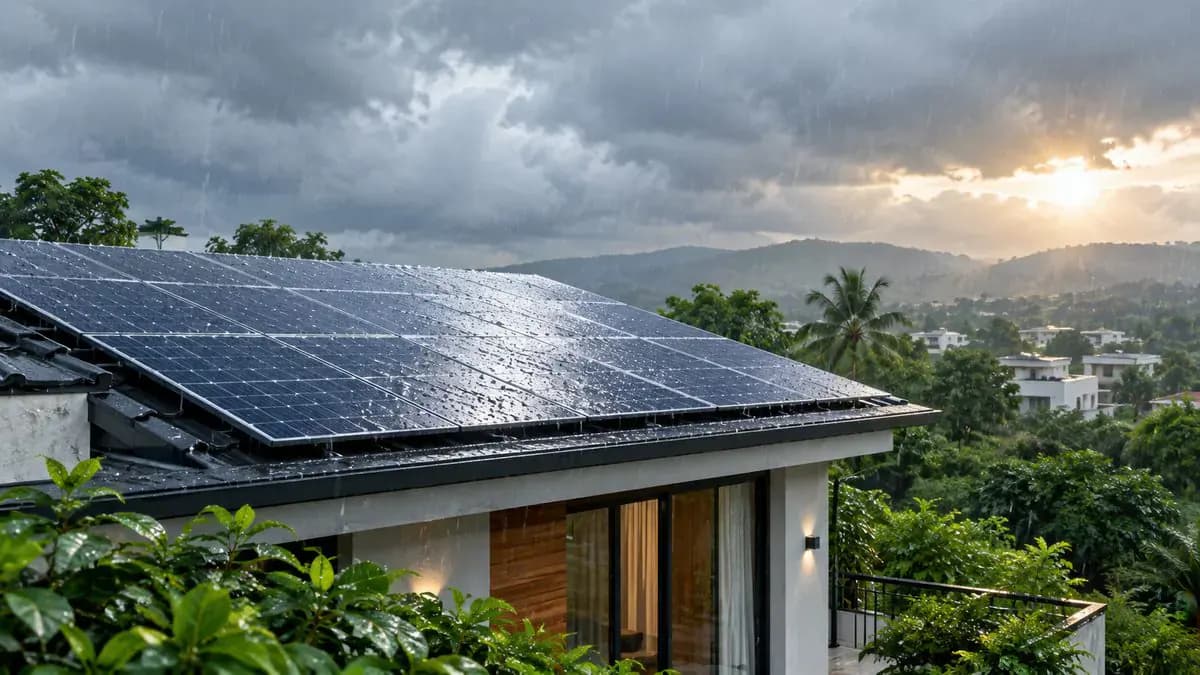
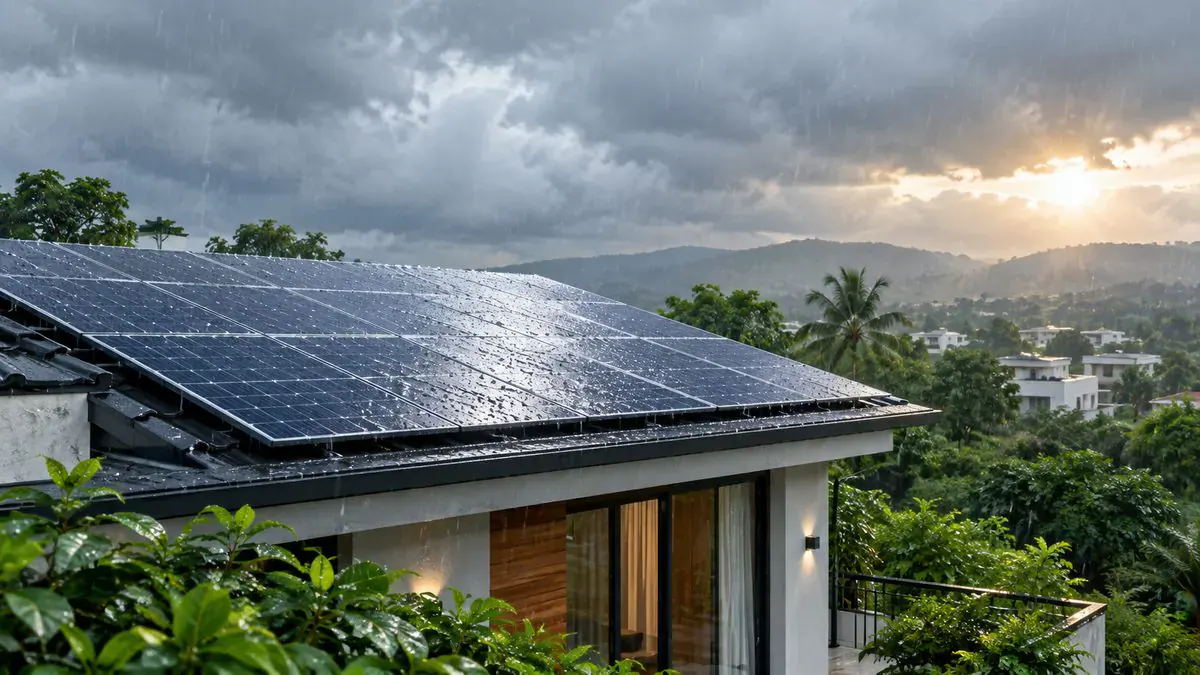
Yes, solar panels continue to work and generate electricity during the rainy season. Solar photovoltaic (PV) panels respond to optical daylight and diffuse solar radiation, not ambient temperature or direct heat. While heavy rain and dark overcast skies reduce power production to 25%–40% of peak rated capacity, panels never drop to zero during daylight hours. Over a full 12-month calendar year, monsoon seasonal dips account for less than 6%–8% of total annual energy yield in India.
If you are evaluating a rooftop solar plant for your home, villa, or commercial property in Gurgaon or Northern India, one of the most frequent questions you will ask is: "Will my solar panels work during the monsoon?"
With 4 to 8 weeks of heavy showers, thunderstorm clouds, and unpredictable weather across July, August, and September, it is natural to wonder whether your investment continues delivering returns when the sun disappears behind grey clouds.
The short answer is a resounding yes. Photovoltaic technology has evolved dramatically. Modern Tier-1 monocrystalline panels convert both direct and scattered daylight into usable alternating current (AC) electricity. Here is a comprehensive engineering and financial breakdown of how solar panels perform in the rain, what output to expect, and how to protect your system.
How Do Solar Panels Work in Rainy Weather? (The Science of Diffuse Radiation)
To understand why solar panels still function in the rain, it helps to understand how sunlight reaches the Earth's surface:
- Direct Normal Irradiance (DNI): Unobstructed sunlight traveling straight from the sun to the panel surface on a crystal-clear summer morning.
- Diffuse Horizontal Irradiance (DHI): Sunlight that has been scattered by atmospheric molecules, water vapor, raindrops, and cloud particles.
Solar photovoltaic cells do not require thermal heat or a scorching hot day to produce power. In fact, extreme heat actually reduces solar panel efficiency by approximately 0.35% to 0.40% for every degree Celsius above 25°C.
During the rainy season, clouds scatter direct rays, but a significant portion of electromagnetic photons (visible light spectrum and ultraviolet radiation) penetrates right through cloud vapor. Modern N-Type TOPCon and Mono-PERC solar cells have specialized textured silicon wafers and anti-reflective coatings designed to trap this diffuse light, allowing the inverter to continue feeding clean solar electricity into your home or commercial distribution board.
Solar Generation by Weather Condition: The Output Breakdown
How much electricity does a typical rooftop solar system generate in different weather conditions? The table below compares expected performance across common monsoon scenarios:
| Weather ConditionSunlight TypeExpected Generation (% of Peak)Impact on 5 kW System (Daily Output) |
|---|
| Bright Sunny Day (May / June)Direct Irradiance90% – 100% (Peak Capacity)22 – 26 kWh (Units) | |||
|---|---|---|---|
| Light Passing Clouds | Mixed Direct + Diffuse | 65% – 85% Output | 16 – 21 kWh (Units) |
| Overcast Sky (No Rain) | 100% Diffuse Daylight | 40% – 60% Output | 10 – 15 kWh (Units) |
| Moderate Drizzle / Continuous Rain | Filtered Diffuse Light | 25% – 40% Output | 6 – 10 kWh (Units) |
| Severe Storm / Black Thunderclouds | Severely Attenuated Light | 10% – 20% Output | 2 – 5 kWh (Units) |
| Night Time | None | 0% Output | 0 kWh (Grid / Battery active) |
As shown above, even on a fully overcast rainy afternoon in Gurgaon, a 5 kW residential solar plant will still generate between 6 and 12 units of clean electricity. This is enough to power your refrigerator, LED lights, fans, Wi-Fi routers, and LED televisions without drawing expensive power from the DHBVN grid.
Can Rain, Moisture, or Hail Damage Solar Panels?
Homeowners often worry whether relentless torrential rain, high-velocity squalls, or moisture ingress will damage rooftop solar modules. When engineered by a professional installer like Voltmen Solar, your system is fortified against extreme weather:
- IP68 Waterproof Junction Boxes: All DC terminal boxes, bypass diodes, and MC4 electrical connectors are rated IP67 or IP68. They are hermetically sealed against high-pressure water jets and continuous moisture immersion.
- 3.2mm Toughened Tempered Glass: Front module glass is thermally tempered to withstand the impact of 25mm hail stones traveling at over 80 km/h. It will not crack or pit under heavy downpours.
- Hot-Dip Galvanized Mounting Structures: Voltmen Solar uses heavy-duty pre-galvanized or hot-dip galvanized steel superstructures rated for wind loads up to 150 km/h, preventing rooftop uplift during monsoon gale-force storms.
- Class-II Surge Protection Devices (SPD) & Lightning Arresters: Monsoon storms bring lightning hazards. Every Voltmen installation includes dedicated DC and AC surge arresters coupled with dual maintenance-free chemical copper earthing pits to safely route high-voltage surges directly into the ground.
Does Rain Clean Solar Panels? (Myth vs. Reality)
A widespread solar myth is that the monsoon completely cleans your rooftop panels for free, saving you from maintenance. The truth is more nuanced:
What Rain Helps With
Rain does wash away loose surface dust, sand particles, and dry pollen that accumulate on dry summer terraces in Gurgaon. On steep pitched roofs (tilt angle > 15°), a heavy shower gives panels a refreshing rinse.
What Rain Cannot Remove
Research from the National Renewable Energy Laboratory (NREL) shows that rain is not a substitute for proper cleaning:
- Muddy Edge Buildup: Rainwater carries rooftop particulate matter toward the bottom aluminum frame. As the water evaporates, it leaves behind a thick strip of dry sludge called "soiling band," which can shade the bottom row of solar cells.
- Airborne Pollution & Grease: In industrial and NCR urban zones, rain mixes with atmospheric sulfur and airborne particulate soot, leaving a sticky grime layer that water droplets cannot dissolve.
- Bird Droppings & Sap: Organic matter hardens in the sun and cannot be dislodged by rain alone.
5 Ways to Maximize Solar Generation and Reliability During Monsoon
To ensure you get the absolute highest performance and zero downtime during the rainy season, incorporate these engineering best practices:
- Install High-Efficiency Monocrystalline or Bifacial Modules: Modern bifacial panels capture diffuse ambient light from both the front surface and ground albedo reflection from the wet rooftop terrace, boosting monsoon output by 8% to 15%.
- Ensure an Optimal Structural Tilt Angle: Never install panels completely flat (0° tilt). A minimum incline of 12° to 15° facing South ensures rainwater runs off naturally, preventing water ponding and localized hot-spot cell degradation.
- #0B1F33]">Opt for a Hybrid Solar Inverter with Lithium Battery Storage: During the monsoon, urban grids in Gurgaon and Haryana often trigger precautionary power shutdowns during heavy rain and localized waterlogging. While on-grid systems turn off during power cuts, a [hybrid solar system with LiFePO4 battery storage switches over in under 10 milliseconds, keeping your air conditioners, lights, and appliances running smoothly.
- #0B1F33]">Leverage DHBVN Net Metering Banking: Under Haryana's solar policy, excess units generated during sunny months (March through June) are banked as billing credits with DHBVN. When your solar generation dips during a rainy week in August, the utility offsets your consumption against banked credits, meaning your electricity bill remains zero. Learn how this works in our [DHBVN Net Metering Process Guide.
- Monitor System Telemetry via Mobile App: Real-time generation apps highlight sudden string drops or inverter tripped faults immediately, ensuring a loose MC4 connector or tripped breaker is resolved before it costs you units.
Is Solar Power Worth It in Regions with a Rainy Season?
Yes, absolutely. When calculating the payback period of a rooftop solar plant, energy yields are calculated on an annual cumulative basis (365 days) rather than week-by-week:
- Gurgaon receives 300+ days of bright sunshine per year.
- The annual average solar insolation in Haryana is 5.0 to 5.5 kWh/m²/day.
- The rainy season in Northern India typically spans 30 to 45 intermittent days, during which your panels still produce 25% to 60% of their rated capacity.
In practical terms, an annual generation loss of just 5% to 8% during the monsoon is completely negligible compared to the massive 90% bill reductions achieved across the other 10 months of the year. The return on investment (ROI) remains firmly at #0B1F33]">2.8 to 3.5 years for residential systems under the PM Surya Ghar subsidy of ₹78,000. Review our detailed [Solar System Cost in Gurgaon Price Guide for exact capacity pricing.
Frequently Asked Questions
Yes. Solar panels can continue producing electricity during rainy weather because they can use available daylight and diffuse sunlight. However, electricity production usually decreases when clouds and heavy rain significantly reduce the amount of sunlight reaching the panels.
Yes. Solar panels generate between 25% and 70% of their peak capacity on overcast days using diffuse sunlight. Atmospheric water vapor scatters light, but high-efficiency monocrystalline PERC and TOPCon panels are specifically engineered to capture these wavelengths.Do solar panels work on cloudy days?
No. High-quality Tier-1 solar panels are built with 3.2mm tempered impact-resistant glass, IP68 waterproof junction boxes, and anodized aluminum frames rated for 150+ km/h winds and heavy hailstorms. Professional chemical earthing and lightning arresters protect the electronics against power surges.Can rain or monsoon storms damage solar panels?
Rain can rinse away loose surface dust and light pollen, but it should not be considered a complete cleaning solution. Sticky urban pollutants, vehicle soot, and bird droppings often turn into muddy sludge that dries along the lower module edges, requiring a post-monsoon professional cleaning.Does rain clean solar panels completely?
Standard on-grid solar inverters automatically shut down during grid power cuts for safety reasons (anti-islanding protection). If your sector in Gurgaon experiences frequent monsoon outages, a hybrid solar system equipped with lithium battery storage ensures seamless sub-10ms power backup so your lights, fans, and appliances never lose power.What happens during power cuts in the rainy season?
Ready to Power Your Home with Clean Solar Energy?
Do not let the monsoon hold you back from enjoying free, clean solar power. A properly designed rooftop solar plant from Voltmen Solar is customized to your roof orientation, local weather patterns, and power consumption.
Our in-house engineers manage everything: free on-site 3D shadow mapping, DISCOM approvals, DHBVN net metering, and end-to-end PM Surya Ghar subsidy processing of up to ₹78,000.
Speak with our solar engineers today or schedule a free site survey in Gurgaon. Get a Free Solar Quote →